
Yoga Therapy in Asheville, NC
Nancy Whitman | APR 6, 2025
yoga therapy
asheville nc
benefits of yoga therapy
what is yoga therapy

If you are reading this blog, chances are you belong to a community of people who are interested in improving some part of their physical, emotional, or spiritual self.
What if you found a modality that could improve your whole self?
Yoga therapy is an emerging field in healthcare in Asheville, NC, and throughout the nation. Yoga Therapy is a healing modality that includes holistic approaches that complement Western medicine and is supported by a growing body of research evidence that shows mind/body practices help improve well-being.
Asheville, NC, and the surrounding area is known for offering integrated wellness using outdoor activities such as, the healing power of nature, vortex energy exploration, and forest bathing. Asheville, NC, is a strong community-oriented location renowned for health and wellness, the arts and culture, and stunning natural beauty.
In traditional wellness services, patients may have experienced treatments or activities that address one level of healing. It often becomes apparent that there are rarely once-and-done fixes. Many modalities treat the symptoms, imbalances, or diseases physically or mentally, but don’t address the idea that every part of your being is an interconnected whole.
Yoga explores the mind/body connection and believes this connection impacts the whole person - mind, body, and spirit. Holistic healing steers away from isolating parts of the mind/body and addresses the interconnected whole being.
Today’s society and culture encourages lifestyles that may feel rushed and create imbalances and disconnection from self and others. Stress is the main contributing factor in many illnesses and diseases.
Yoga therapy brings your mind, body, and spirit into balance. Be safe, be heard, and empower yourself to improve your well-being. You don’t need any level of flexibility or previous yoga experience. Yoga therapy is for you if you want to bring some part of your being into balance or just feel better in your life.
Yoga therapy is an accredited field of healthcare that meets certain standards requiring training in specific skills. For example, to become a yoga teacher, you need 200 hours of training and can be registered with the Yoga Alliance. To become a yoga therapist, you have 800 hours of additional training beyond the yoga teacher. I trained with Inner Peace Yoga Therapy.
A yoga teacher will use an instruction-based approach, giving instructions as what to do. A yoga therapist will ask you to fill out an intake form and will complete an assessment with you. You work together to design a treatment program that meets your needs and goals. You define your goals – we figure out your current state and concerns – together we determine a plan or method to reach toward your goals – then follow-up. What’s working? What’s not? Where do you feel progress? What needs to stay the same; what needs to change.
Yoga therapy is an integrative field of health care that works to complement Western medicine and is supported by a growing body of research evidence that shows mind/body practices help improve well-being. The IAYT International Association of Yoga Therapists, sets the standards for accreditation based on the research. IAYT defines yoga therapy as the professional application of the principles and practices of yoga to promote health and well-being within a therapeutic relationship that includes personalized assessment, goal setting, lifestyle management, and yoga practices for individuals or small groups.
Yoga therapy empowers people to bring more ease and confidence into their lives. The sessions are traditionally one-on-one focusing on each individual’s specific goals. There are small group classes that are comprised of people with similar health concerns such as arthritis, pain care, anxiety, sleep, and stress management.
Yoga therapy uses the principles of yoga to help bring more ease and comfort in your daily living. These practices may include, physical poses, breath work, meditation, and general lifestyle changes. The intention of yoga therapy is to help individuals live life more fully.
Cleveland Clinic defines yoga therapy as:
Yoga therapy is a mind-body practice that focuses on your physical, emotional, and mental health. The practice uses movement, mindfulness, meditation, relaxation, and breathing exercises to help you relax, relieve stress, and manage underlying conditions or symptoms in addition to treatment by a healthcare provider.
Covid-19 brought healthcare accessibility to the online community. One-on-one yoga therapy sessions are available online to clients that tried other treatment modalities that address only an isolated part of an individual’s being. Yoga therapy pursues a supportive blend of practices to address the physical, emotional, mental, and spiritual levels of a person.

These are frequently asked questions in the Asheville area:
What do you do in yoga therapy?
Typically you will have a free consultation phone call with me to make sure we are a good fit to work together. Then you will complete an intake form. We will have a session to go over your intake and complete postural and breathing assessments. With your input, I will create a treatment plan taking your needs and time constraints into consideration. You would practice the treatment plan, then we meet again to go over what is helpful and what is not. We may agree to modify the original plan. This is an ongoing process.
What’s the difference between yoga therapy and yoga?
Yoga therapy is usually one-on-one or in small groups. There is an intake form and assessments to determine individual needs. Working together, the therapist and client create a treatment plan.
Yoga is often practiced in groups with the teacher cueing one movement at a time to the entire group.
What are the principles of yoga therapy?
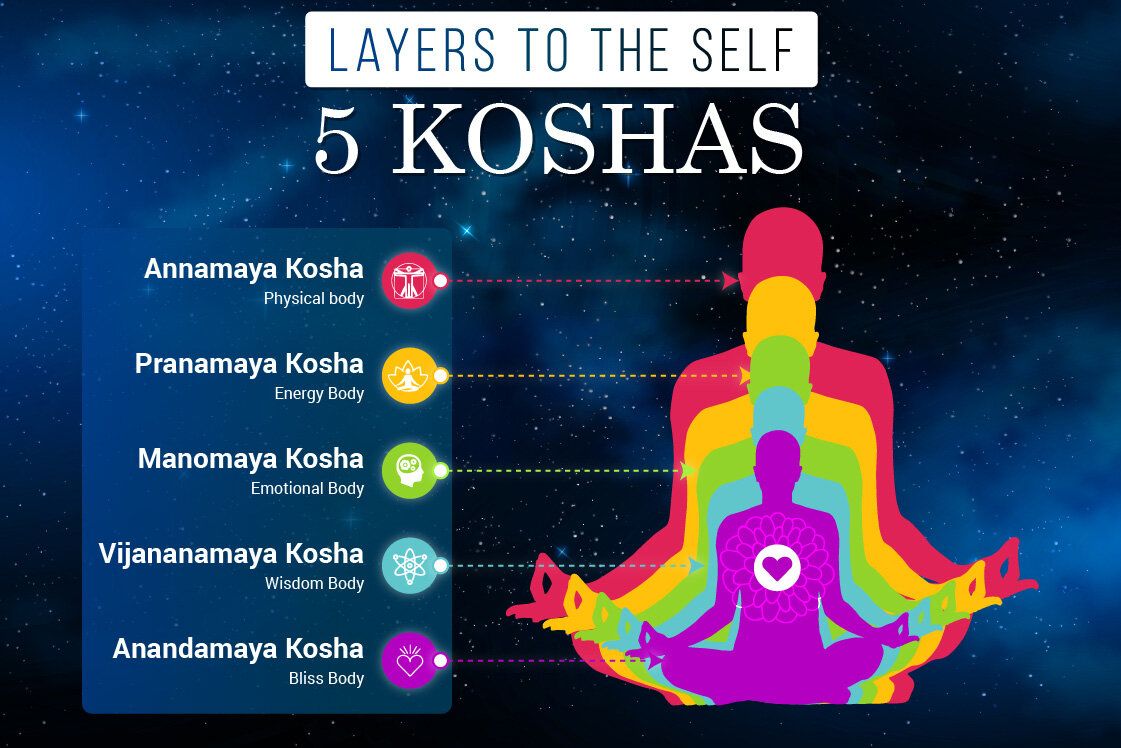
Yoga therapy utilizes the Panchamaya Kosha model of five koshas or layers of each person to look at the whole individual.
Annamaya Kosha – physical body (physical)
Pranamaya kosha – energy body (breath)
Manomaya Kosha – emotional body (mental health)
Vijanamaya Kosha – wisdom body (discernment)
Anandamaya Kosha – bliss body (joy)
This Panchamaya Kosha illustration from Amy Gaster C-IAYT in google images shows how these bodies correlate to one another within each of us:
2025 Trends of Yoga Therapy As noted by the Global Wellness Institute are:
TREND 1: Biohacking for Longevity
TREND 2: Shift Towards Yoga Therapy as Tool to Regulate Mental Health Symptoms
TREND 3: Yoga Therapy Cools Hot Flashes
TREND 4: Unplugging from Anxiety for the Anxious Generation
TREND 5: Losing the Grip on Addiction
What are the benefits of yoga therapy:
New Method Wellness lists the following benefits when using yoga therapy in addiction recovery:
· Improved mood
· Better stress tolerance
· Increased mental concentration
· Reduced fatigue
· Emotional healing
· Healthier lifestyle habits, such as diet and exercise
· Restored connection with oneself
· Self-empowerment
Cleveland Clinic lists some benefits as:
· Stress relief.
· Mental clarity.
· Stronger muscles.
· Reducing pain and pressure.
· Increasing balance.
· Helping you sleep.
· Aligning your body for best function.
Some of my clients have found the following benefits:
· Reduced stress
· Reduced anxiety
· Improved pain relief
· Improved sleep
· Increased patience and tolerance
· Increased focus and clarity
· Improved posture, movement, and flexibility
· Increased body awareness
· Improved confidence and boundary setting
· Increased range of motion and mobility
These are some of my instructors and areas of study:
500 hours teacher training – Rolf Gates
Inner Peace Yoga Therapy – Michele Lawrence
Functional Yoga Therapy - Maria Mendola Shamas
Yoga of Recovery - Durga Leela
Yoga for Grief Relief – Antonio Sausys
Yoga and Pain – Neil Pearson
Yoga for Survivors (Cancer) – Laura Kupperman
Ayurvedic Yoga Therapy – Chinnamasta Stiles
Healing with the Chakras – Nischala Joy Devi
LifeForce Yoga (Anxiety and Depression) – Amy Weintraub
Trauma Informed Yoga Therapy I & II (Sundara) – Genevieve Yellin
Applied Ayurvedic Studies - Indu Arora
The Living Vitality of your Authentic Self – Shanti Shanti Kaur Khalsa
Advanced Functional Yoga Therapy – Maria Mendola Shamas
Pelvic Floor – Leslie Howard
Mudras - Joseph LePage
Meditation and Sadhana - Lisa Pearson

Nancy Whitman | APR 6, 2025
Share this blog post



© 2026 Nancy Whitman